Proximity Sensors
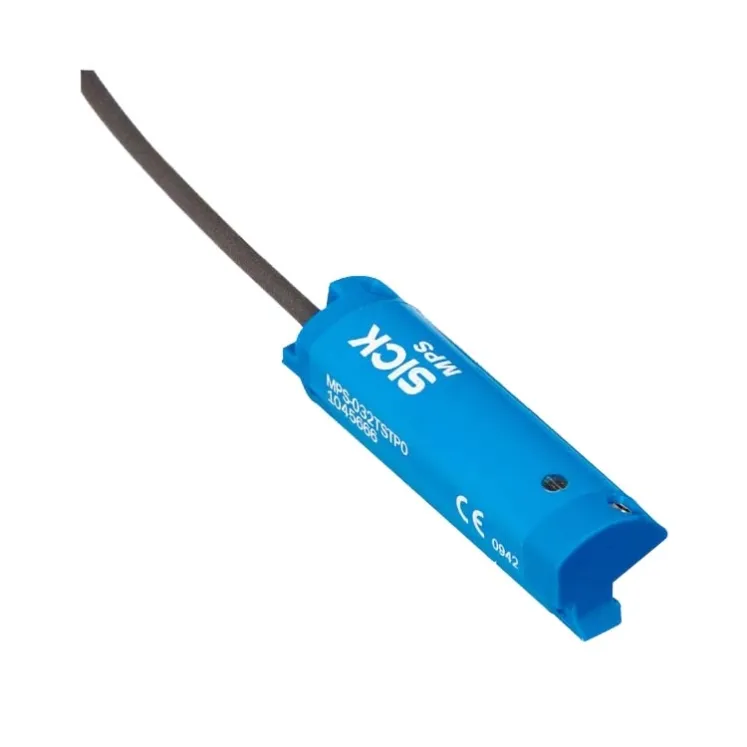
SICK MPS-064TSNP0 Sensor
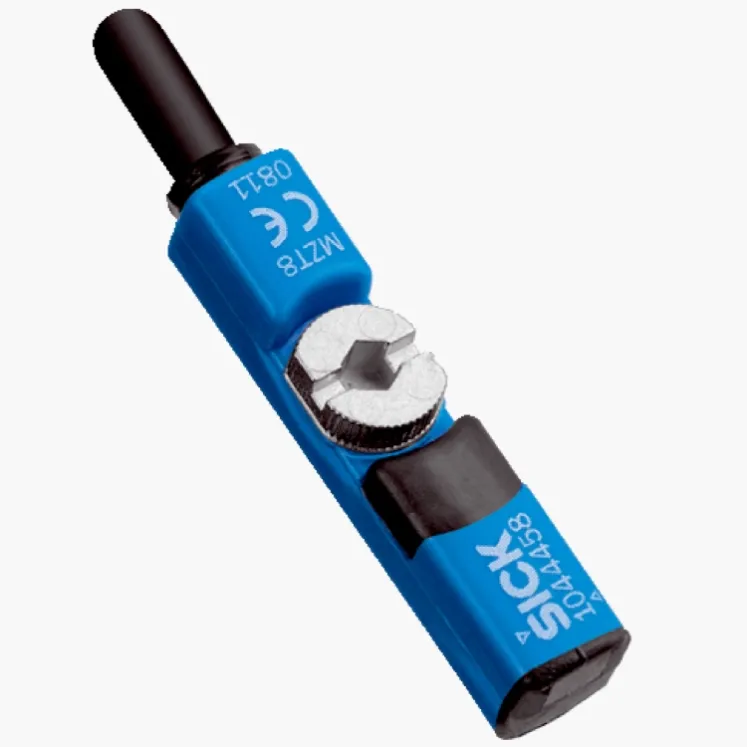
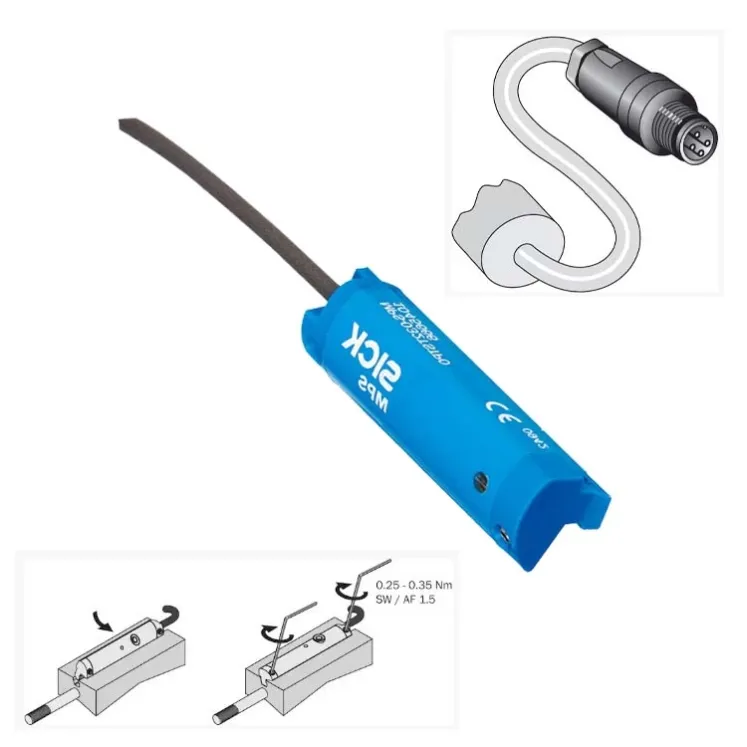
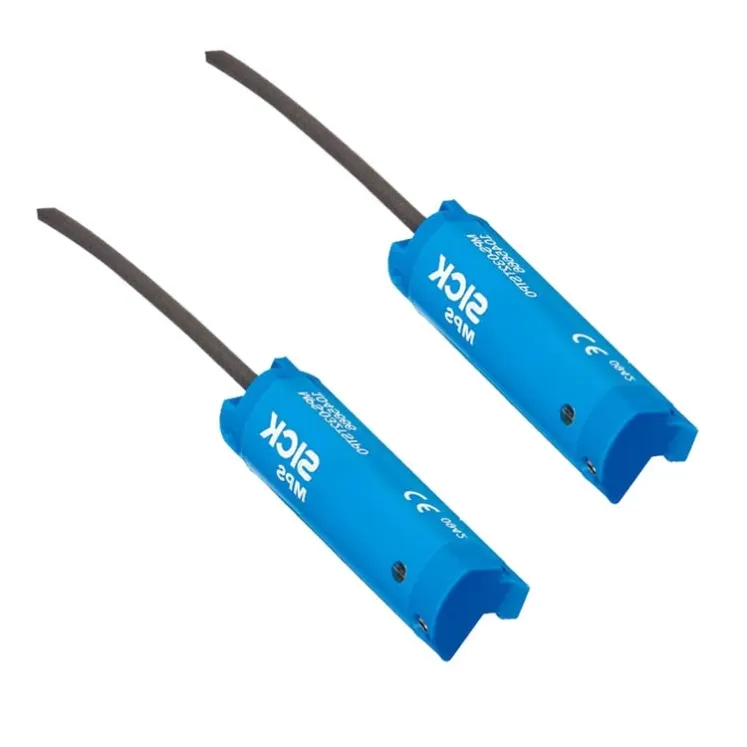
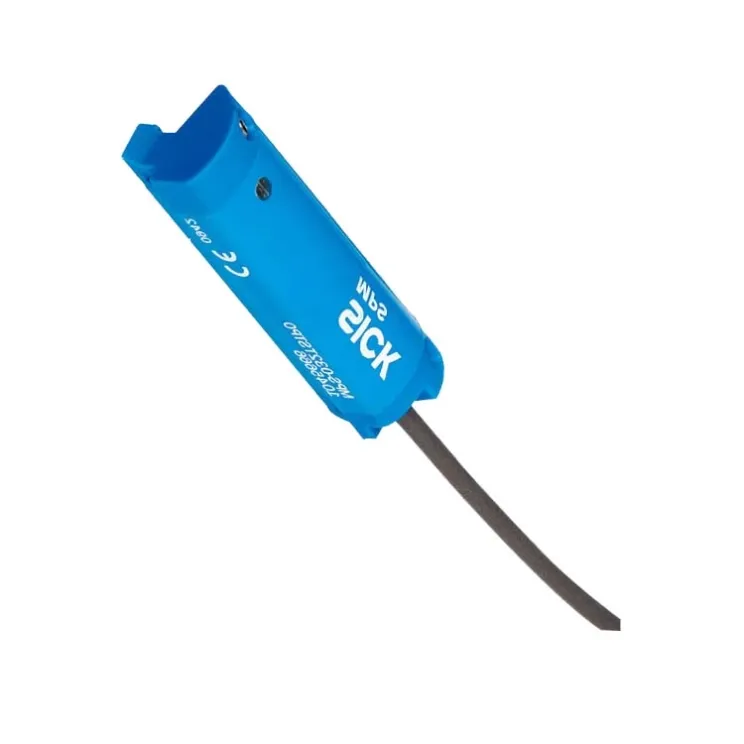
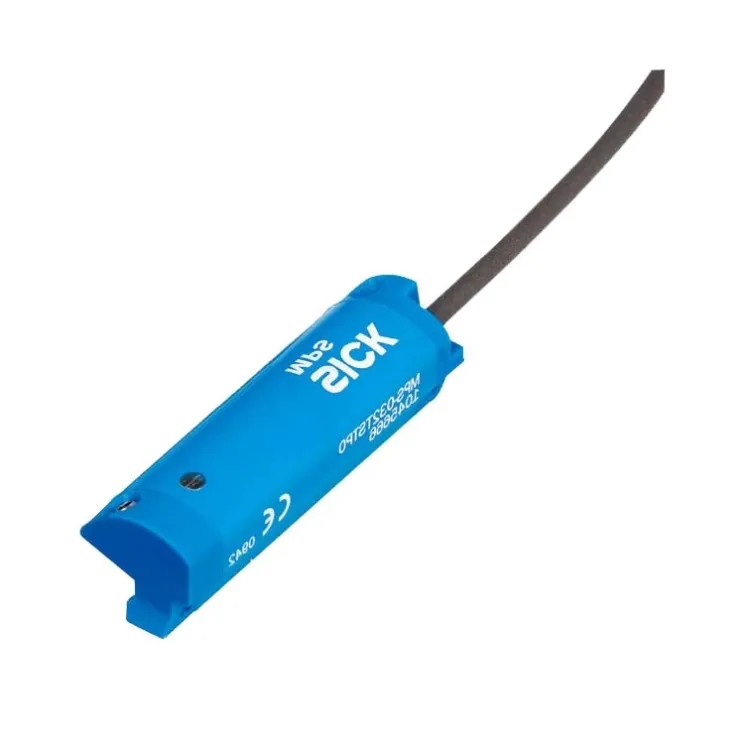
SICK MPS-064TSNP0 cylinder position sensor, part 1053836. T-slot mounting, contactless piston magnet detection for pneumatic cylinders.
Overview
The SICK MPS-064TSNP0 (part number 1053836) is a cylinder position sensor of the MPS-T family for T-slot pneumatic cylinders. Clamped into the cylinder slot, it detects the piston magnet through the profile wall and reports piston position as a switching signal for reliable end-position and mid-stroke monitoring.
How It Works
The piston's magnetic field penetrates the non-magnetic cylinder wall and actuates the sensor element at the clamped position. Detection is contactless, so the sensor is not subject to mechanical wear and switching remains repeatable over millions of cycles.
Key Features
- Position sensor for T-slot profile cylinders
- Part number 1053836
- Contactless detection through the aluminum wall
- Freely positionable switching point in the slot
- Flush-fit housing matched to the profile
- Reliable switching with standard magnet pistons
Typical Applications
- End-position detection on pneumatic cylinders
- Mid-position monitoring on long-stroke actuators
- Position feedback on clamping devices
- Stroke verification on handling systems
- Cycle supervision on automated machinery
Specifications
Attribute | Value |
|---|---|
Model | SICK MPS-064TSNP0 |
Part number | 1053836 |
Detection principle | Magnetic field detection through cylinder wall |
Mounting | T-slot (profile cylinder) |
Installation and Setup Notes
Clamp the sensor into the T-slot at the required position, verify the switching point with slow piston movement, and adjust as needed. Confirm that the slot geometry matches the clamp and that the piston carries a magnet. Protect the cable exit from sharp slot edges.
Frequently Asked Questions
How does it differ from a reed switch?
Electronic magnetic evaluation provides higher switching reliability and longer life than mechanical reed contacts.
Can two sensors share one cylinder?
Yes, clamping sensors at both ends provides both position signals.
Does aluminum shielding matter?
No, the magnetic field penetrates the non-magnetic aluminum wall without attenuation of concern.