
Distance and Measurement Sensors
SICK LFV200-XXSGBTPM Sensor
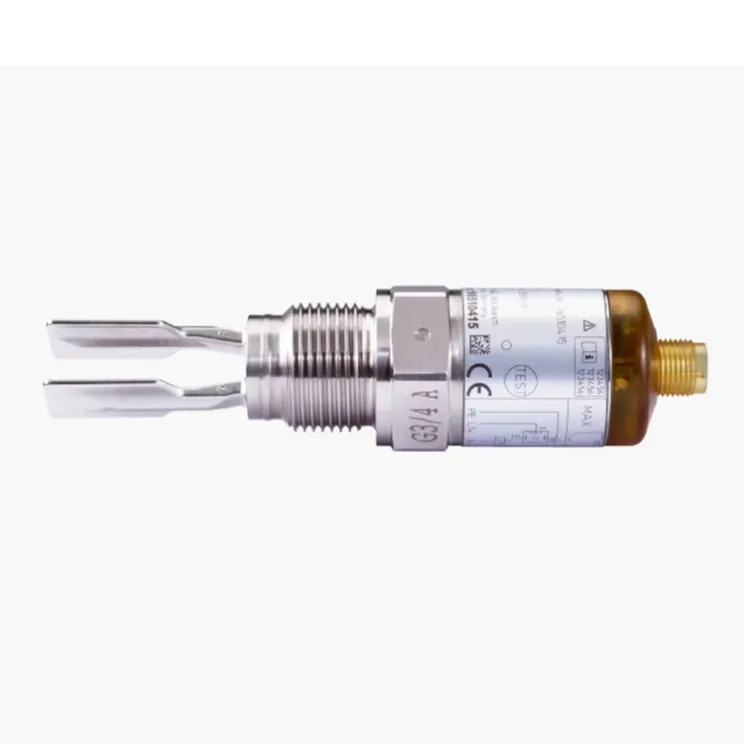
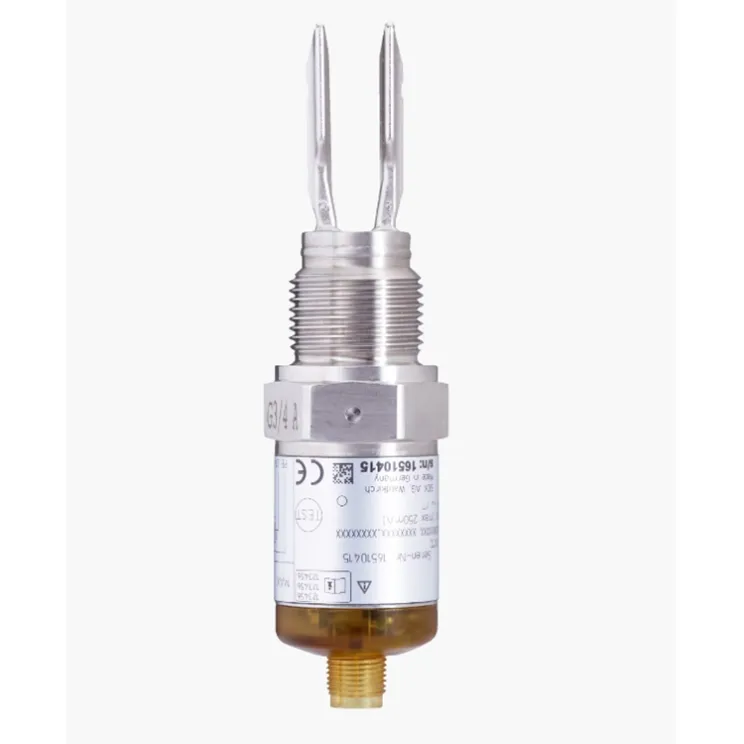
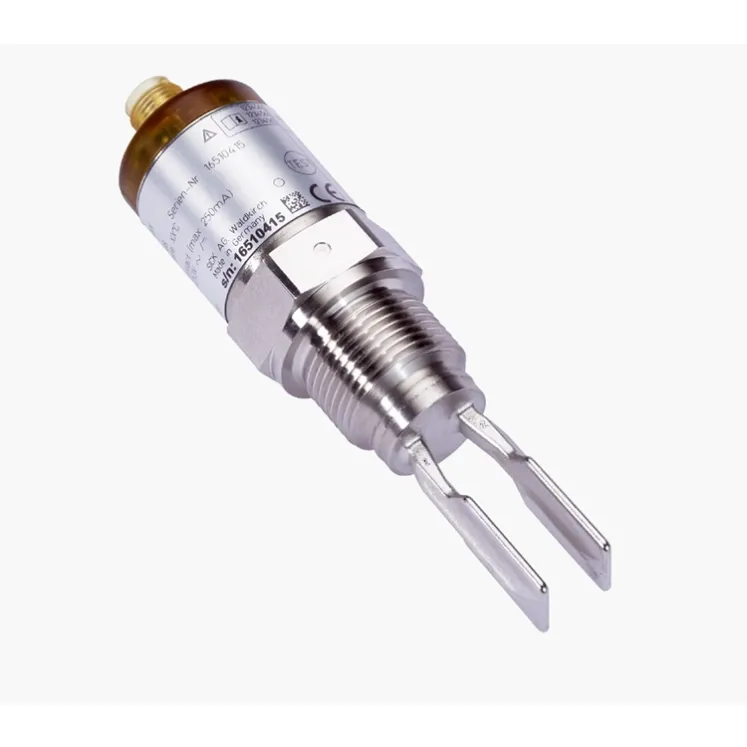
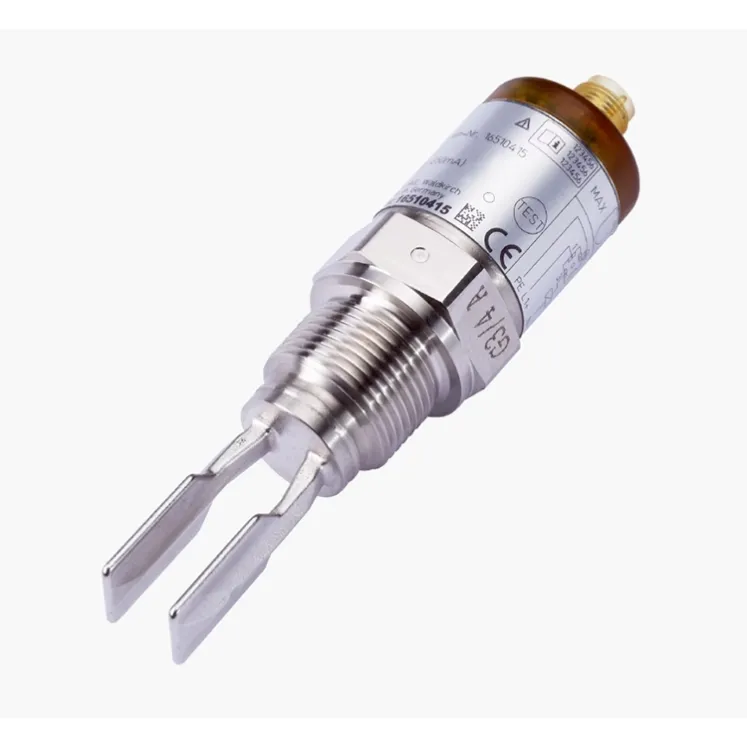
SICK LFV200-XXSGBTPM vibrating level switch, part 6036351. Stainless fork for overfill and dry-run protection, immune to deposits.
Overview
The SICK LFV200-XXSGBTPM (part number 6036351) is a vibrating level switch of the LFV200 family. The compact stainless tuning fork detects when liquid reaches its switching point and outputs a reliable switching signal, providing overfill and dry-run protection for tanks and pipes.
How It Works
The electronics keep the fork vibrating at its resonance frequency. When liquid surrounds the fork, the vibration is damped and the frequency shifts; the electronics evaluate this shift and switch the output. The principle is independent of the liquid's conductivity, dielectric constant and color.
Key Features
- Vibrating fork point-level switch for liquids
- Immune to deposit formation on the fork
- Stainless steel housing for process environments
- Part number 6036351
- PNP switching output (family standard)
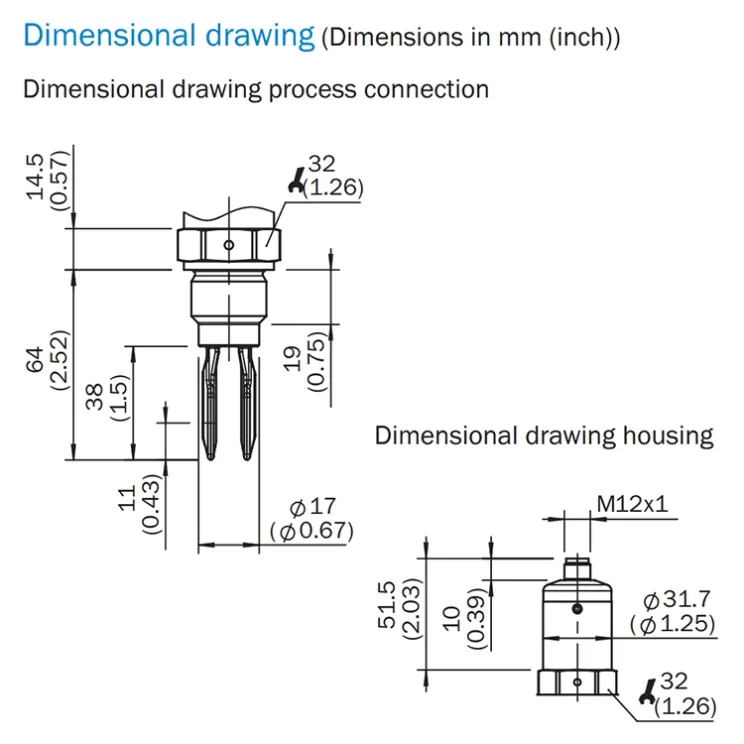
- Short probe variants for compact installation points
Typical Applications
- Overfill protection in storage and process tanks
- Dry-run protection of pumps
- Level monitoring in machine cooling circuits
- Point-level detection in food and beverage processing
- Leak and spill detection in collection vessels
Specifications
Attribute | Value |
|---|---|
Model | SICK LFV200-XXSGBTPM |
Part number | 6036351 |
Detection principle | Vibrating fork point-level switch |
Family | LFV200 level switches |
Output type | PNP switching output |
Installation and Setup Notes
Install the fork so the switching point sits at the level to be monitored, oriented horizontally to the medium flow where possible. Avoid mounting in the direct fill stream. The switch requires no calibration; verify the switching behavior once with the medium during commissioning.
Frequently Asked Questions
Does viscosity affect the switch?
The LFV200 tolerates viscous media well; extremely viscous products should be validated with the actual medium.
Is it affected by deposits?
The vibrating fork design is largely immune to deposit formation, one of its key advantages.
Does it need calibration?
No, the switching point is defined by the fork geometry.
Related Distance and Measurement Sensors
For the companion variant, see the SICK LFV200-XXTGBTPV. For continuous level, see the SICK LFP0025-B4NMB.