Distance and Measurement Sensors
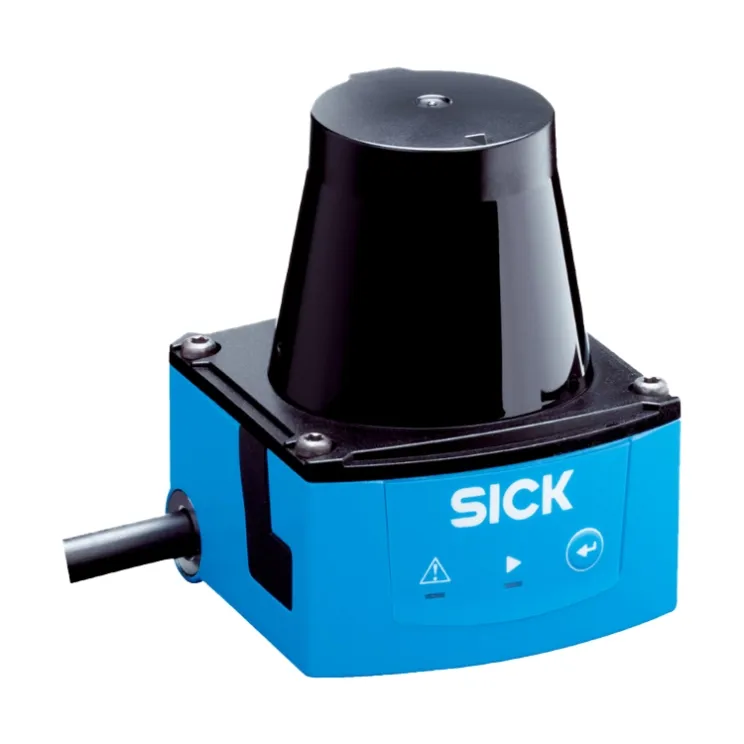
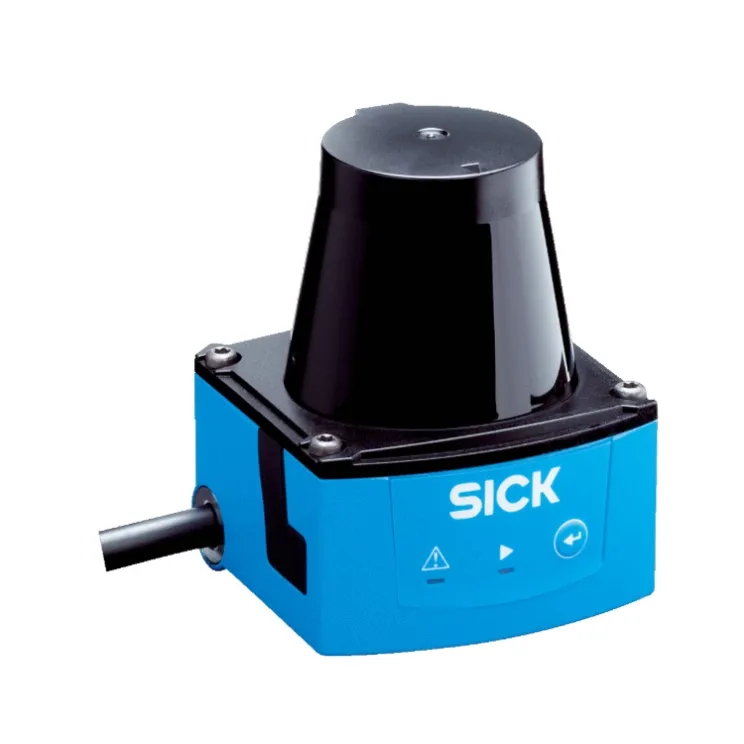
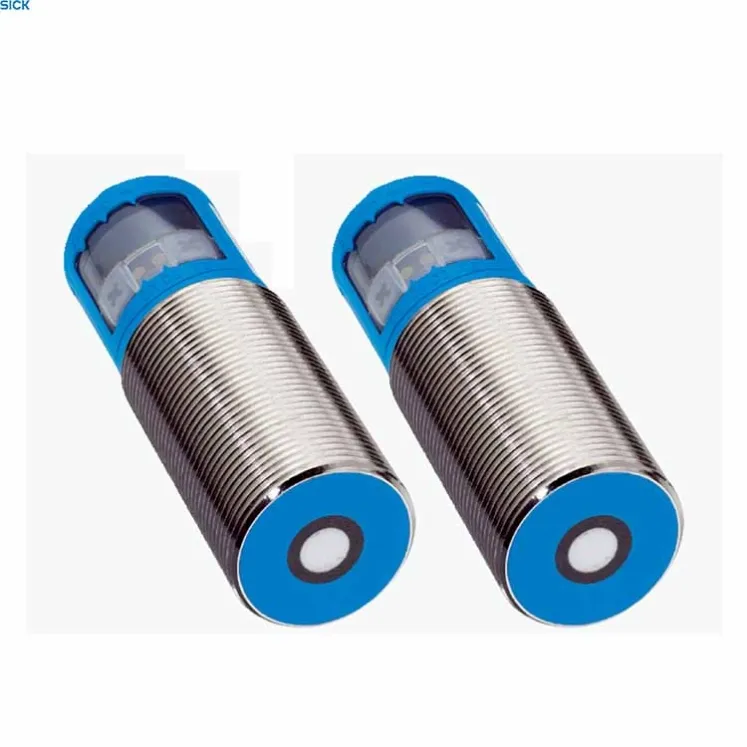
SICK UM30-213118 Sensor
SICK UM30-213118 rectangular ultrasonic sensor, part 6036923. Reliable detection of transparent and shiny targets for packaging lines.
Overview
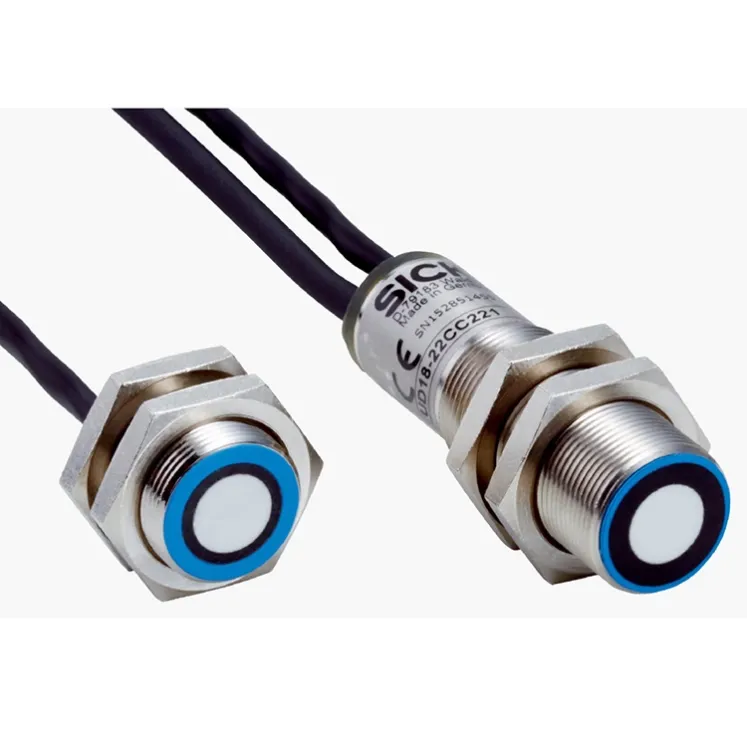
The SICK UM30-213118 (part number 6036923) is a rectangular ultrasonic distance sensor of the UM30 family. It measures distance and detects objects independent of their color, transparency and surface, providing dependable detection where optical sensors are unreliable.
How It Works
The sensor transmits ultrasonic pulses and evaluates the echo runtime to compute the distance to the target. Configured switching thresholds turn the measurement into object detection. Since sound reflects from nearly all surfaces, detection works on liquids, plastics, metals and films alike.
Key Features
- Rectangular ultrasonic housing for easy machine mounting
- Part number 6036923
- Color- and transparency-independent detection
- Insensitive to dust, fog and ambient light
- Distance-based background suppression behavior
- Reliable on liquids and shiny plastics
Typical Applications
- Presence detection of transparent trays and blisters
- Level monitoring in process tanks
- Object detection on glossy film packaging lines
- Double-sheet checks on metal forming equipment
- Distance monitoring in dusty environments
Specifications
Attribute | Value |
|---|---|
Model | SICK UM30-213118 |
Part number | 6036923 |
Detection principle | Ultrasonic distance measurement |
Family | UM30 ultrasonic sensors |
Installation and Setup Notes
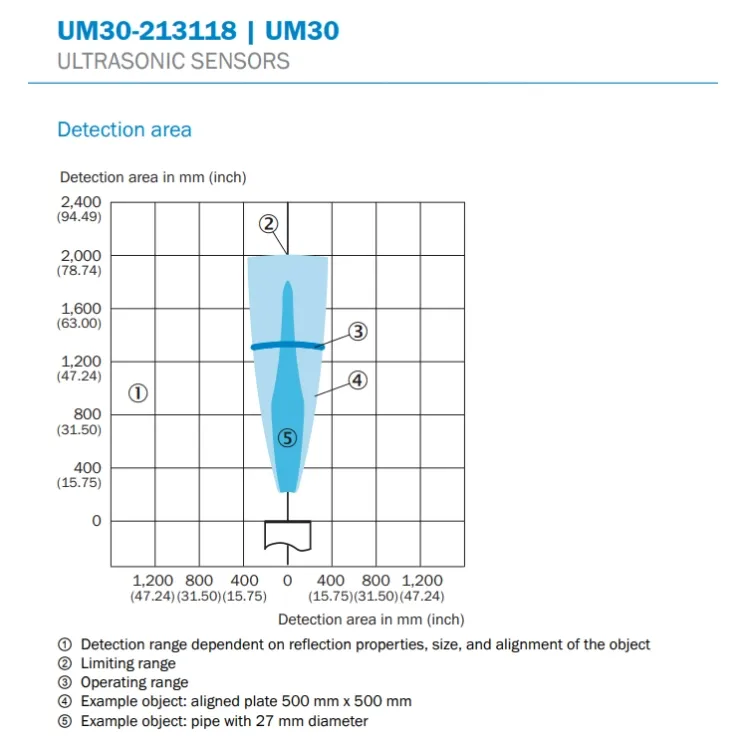
Mount the sensor so the acoustic cone reaches the target without obstruction, and set thresholds with the real product. Very sound-absorbent materials should be validated on site. For liquid measurement, avoid foam layers between sensor and liquid surface.
Frequently Asked Questions
Can it replace a photoelectric sensor on shiny parts?
Yes, that is its typical role: reliable detection where gloss and transparency defeat optics.
Does it need a reflector?
No, the target itself reflects the sound.
What is the difference from the UM30-21411B variant?
They are family variants with different connection and evaluation configurations.