Distance and Measurement Sensors
SICK MRS1104P-111011 Photoelectric sensor
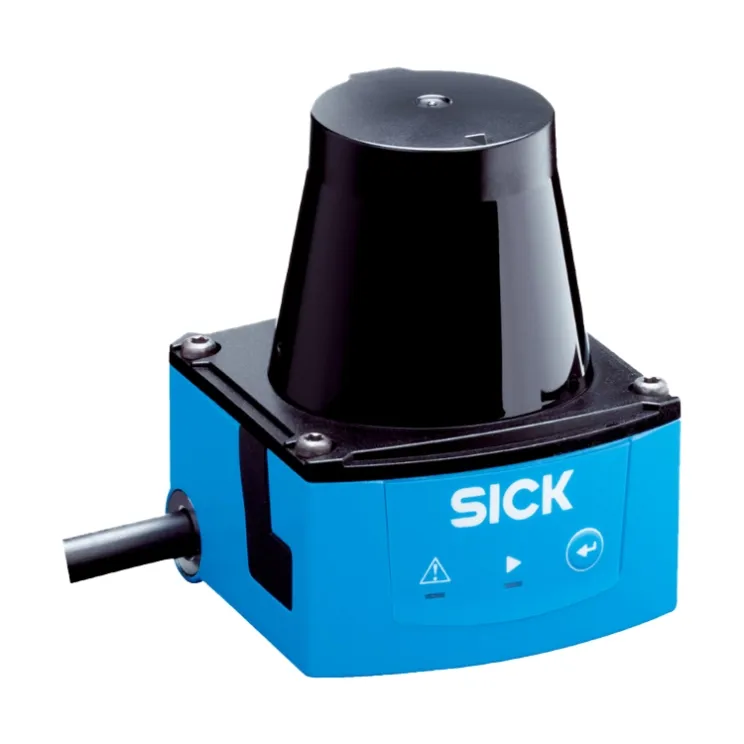
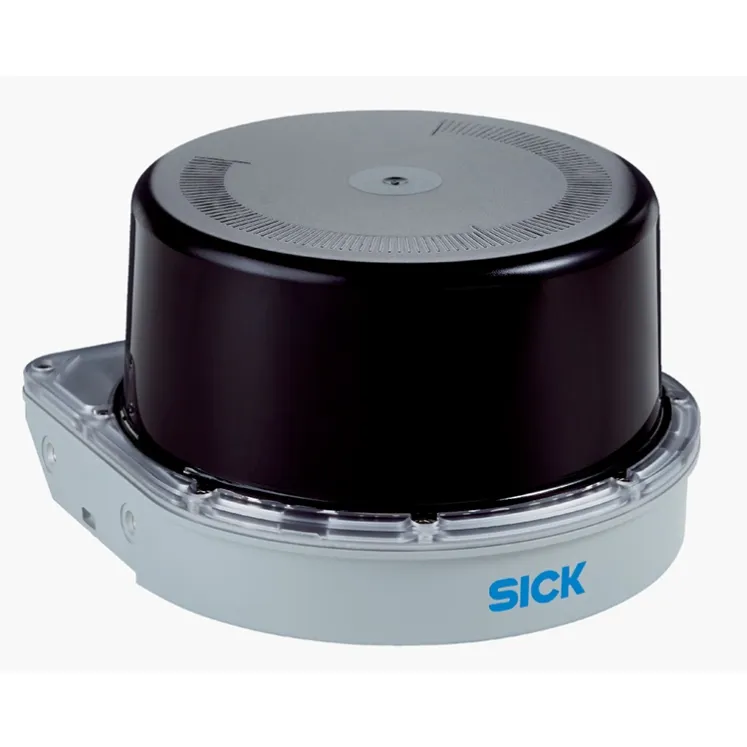
SICK MRS1104P-111011 3D LiDAR sensor, part 1104278. Four scan layers, 275 degrees, 0.2-64 m range for AGV and mobile machine perception.
Overview
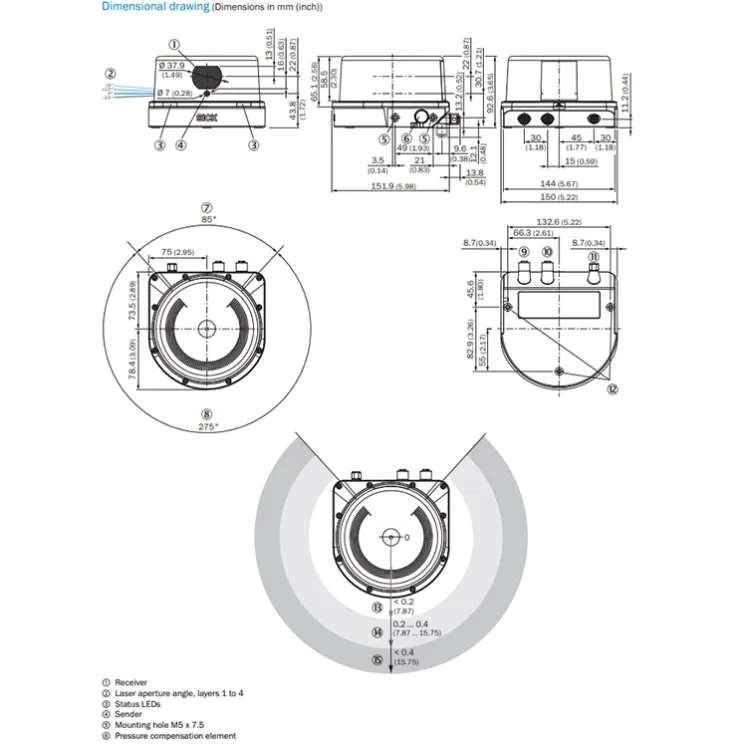
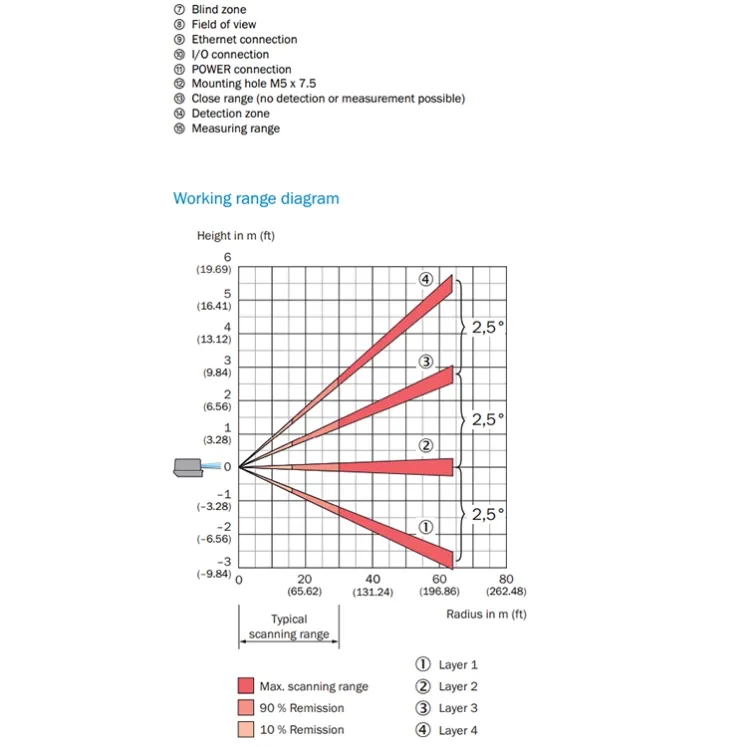
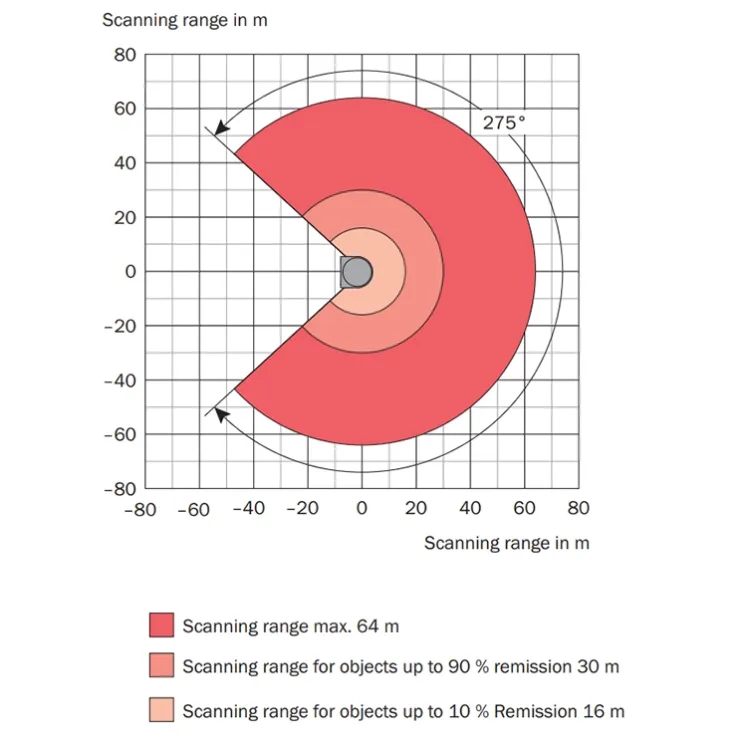
The SICK MRS1104P-111011 (part number 1104278) is a 3D LiDAR sensor of the MRS1000P family. Four scan layers cover an aperture of 275 degrees horizontally and 7.5 degrees vertically, detecting objects in a working range from 0.2 m to 64 m and delivering 3D environmental perception for mobile machines and infrastructure.
How It Works
The sensor rotates a laser across four parallel scan layers at high frequency. Time-of-flight measurement yields a distance value for each angular step and layer, and the resulting 3D point data describes the surroundings. The programmable P-variant processes this data for object and zone detection on board the sensor.
Key Features
- 3D perception with four scan layers
- Working range 0.2 m ... 64 m
- Aperture 275 degrees horizontal x 7.5 degrees vertical
- Part number 1104278
- Programmable variant for onboard object detection
- Robust housing for mobile machinery and industrial use
Typical Applications
- Object detection for automated guided vehicles and shuttles
- Surroundings perception on mobile robots and cranes
- Level and terrain profiling in bulk handling
- Pallet and obstacle detection in intralogistics
- Zone monitoring on automated industrial transport
Specifications
Attribute | Value |
|---|---|
Model | SICK MRS1104P-111011 |
Part number | 1104278 |
Detection principle | 3D LiDAR, 4 scan layers, time of flight |
Working range | 0.2 m ... 64 m |
Aperture angle | 275 degrees x 7.5 degrees (4 layers) |
Installation and Setup Notes
Mount the sensor where the four layers cover the relevant object heights, and keep the window free of heavy soiling. Configure detection zones with the family software tools and validate with objects at different heights and distances. Note that the MRS1000P is a detection sensor, not a safety-rated device.
Frequently Asked Questions
Why four layers instead of one?
The vertical spread of 7.5 degrees across four layers adds the height dimension, so objects of different heights are detected even on uneven ground.
Can it replace safety laser scanners?
No, it is designed for detection and perception; personnel protection requires safety-rated scanners.
How is the data processed?
The P variant evaluates zones and objects onboard and signals results through its interfaces.
Related Distance and Measurement Sensors
For navigation-grade LiDAR, see the SICK NAV350-3232. For compact 2D scanning, see the SICK TIM310-1030000.Overview
The SICK MRS1104P-111011 (part number 1104278) is a 3D LiDAR sensor of the MRS1000P family. Four scan layers cover an aperture of 275 degrees horizontally and 7.5 degrees vertically, detecting objects in a working range from 0.2 m to 64 m and delivering 3D environmental perception for mobile machines and infrastructure.
How It Works
The sensor rotates a laser across four parallel scan layers at high frequency. Time-of-flight measurement yields a distance value for each angular step and layer, and the resulting 3D point data describes the surroundings. The programmable P-variant processes this data for object and zone detection on board the sensor.
Key Features
- 3D perception with four scan layers
- Working range 0.2 m ... 64 m
- Aperture 275 degrees horizontal x 7.5 degrees vertical
- Part number 1104278
- Programmable variant for onboard object detection
- Robust housing for mobile machinery and industrial use
Typical Applications
- Object detection for automated guided vehicles and shuttles
- Surroundings perception on mobile robots and cranes
- Level and terrain profiling in bulk handling
- Pallet and obstacle detection in intralogistics
- Zone monitoring on automated industrial transport
Specifications
Attribute | Value |
|---|---|
Model | SICK MRS1104P-111011 |
Part number | 1104278 |
Detection principle | 3D LiDAR, 4 scan layers, time of flight |
Working range | 0.2 m ... 64 m |
Aperture angle | 275 degrees x 7.5 degrees (4 layers) |
Installation and Setup Notes
Mount the sensor where the four layers cover the relevant object heights, and keep the window free of heavy soiling. Configure detection zones with the family software tools and validate with objects at different heights and distances. Note that the MRS1000P is a detection sensor, not a safety-rated device.
Frequently Asked Questions
Why four layers instead of one?
The vertical spread of 7.5 degrees across four layers adds the height dimension, so objects of different heights are detected even on uneven ground.
Can it replace safety laser scanners?
No, it is designed for detection and perception; personnel protection requires safety-rated scanners.
How is the data processed?
The P variant evaluates zones and objects onboard and signals results through its interfaces.
Related Distance and Measurement Sensors
For navigation-grade LiDAR, see the SICK NAV350-3232. For compact 2D scanning, see the SICK TIM310-1030000.