Photoelectric Sensors
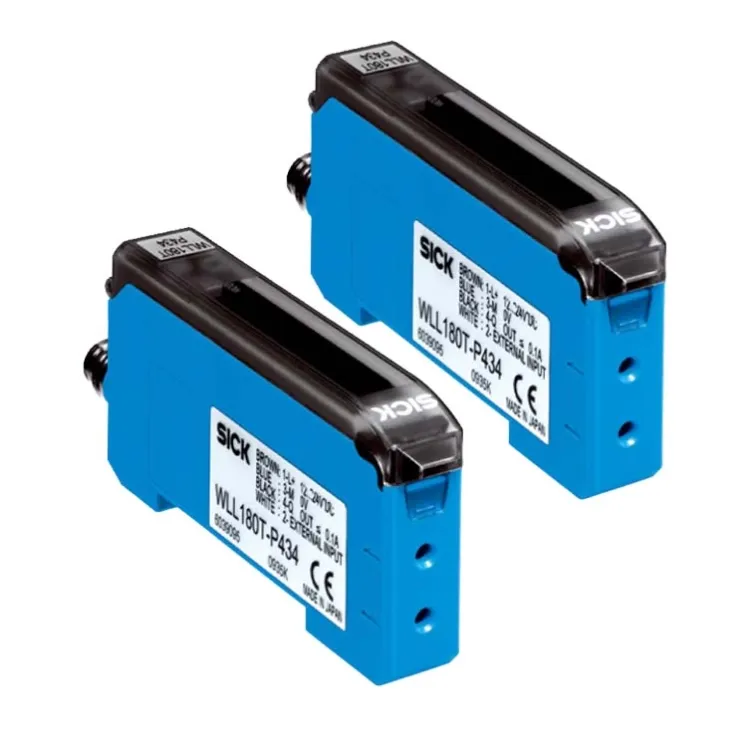
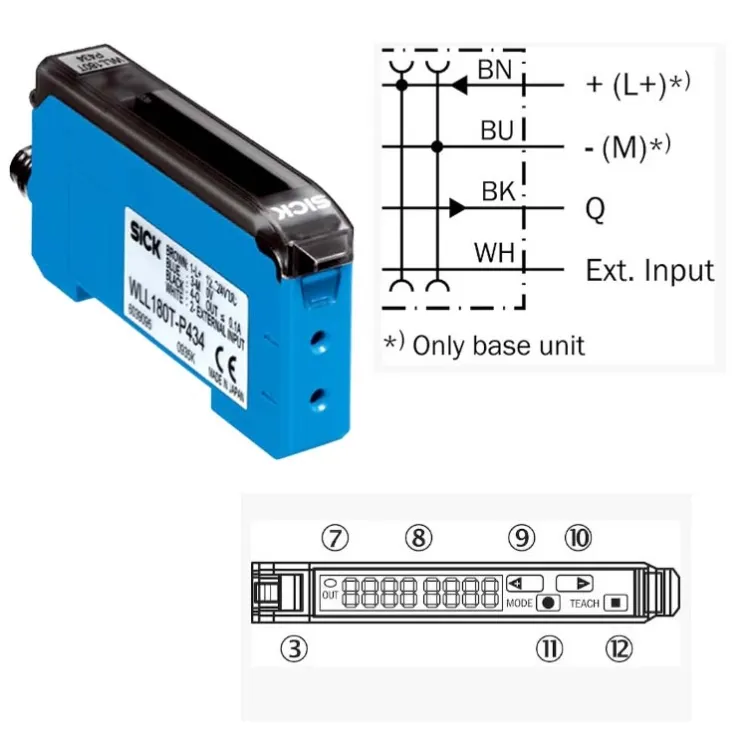
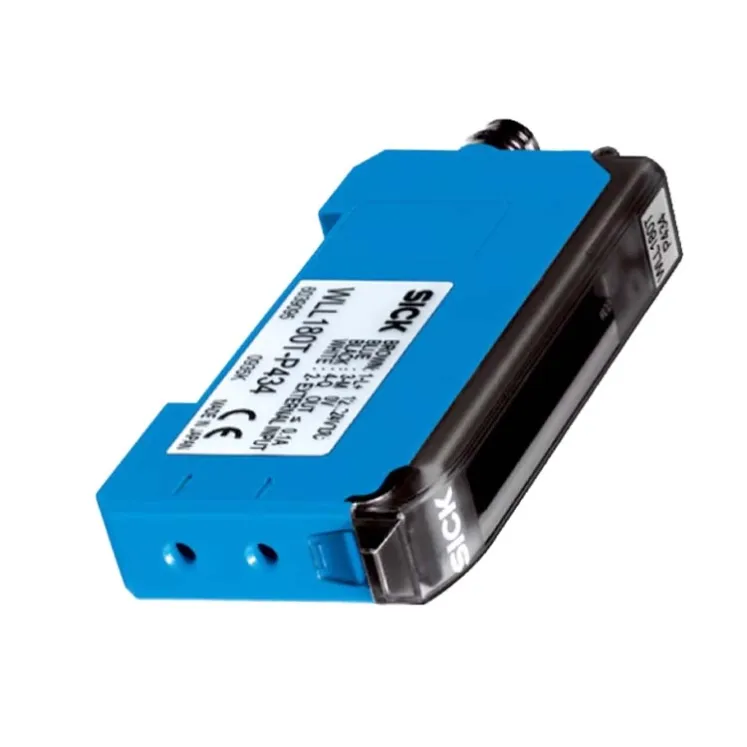
SICK WLL180T-L432 Sensor
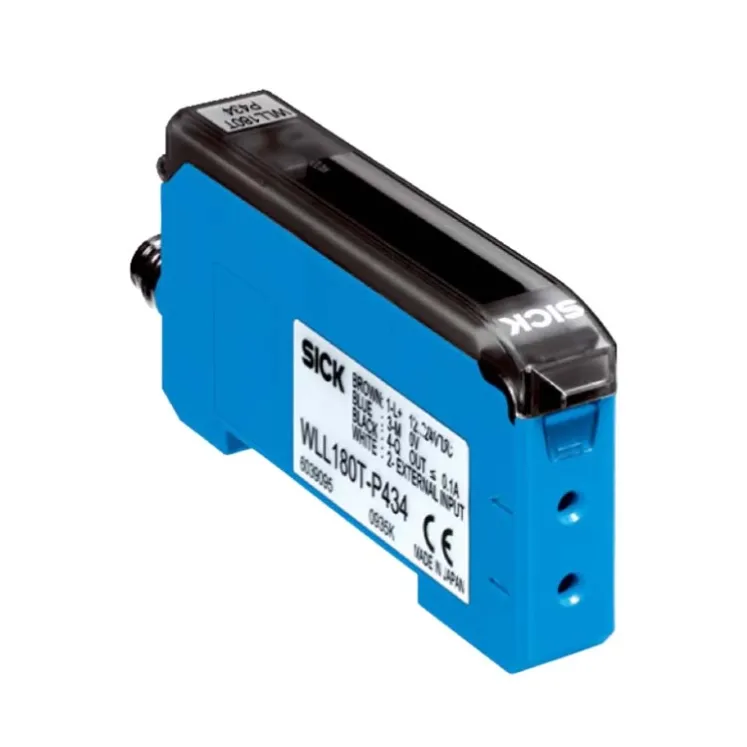
SICK WLL180T-L432 fiber-optic amplifier unit, part 6039099. Detects small parts in tight spaces with LL3/LL4 fibers, immune to EMC and vibration.
Overview
The SICK WLL180T-L432 (part number 6039099) is a fiber-optic amplifier unit from the WLL180 family. The amplifier mounts on the machine or in the control cabinet and evaluates the light received through the attached fiber-optic probes, such as the LL3 or LL4 fiber series. The combination reaches into spaces where conventional photoelectric sensors cannot be installed.
How It Works
Light from the amplifier travels through the sending fiber to the probe tip and, depending on the fiber type, back through a receiving fiber. The amplifier measures the received signal and switches its output at the set threshold. Because only light and glass fibers travel to the sensing point, the system is immune to electromagnetic interference and resistant to vibration.
Key Features
- Separation of electronics and optical probe for tight spaces
- Immune to EMC interference thanks to glass fiber signal path
- Sensitivity adjustment on the amplifier unit
- Fast response suited to small-part and high-speed detection
- Compatible with the LL3 and LL4 fiber series
- Part number 6039099
Typical Applications
- Detection inside assembly heads and gripper tooling
- Small-part and wire presence checks in electronics production
- Detection at hot or vibrating machine points unsuitable for electronics
- Mark and edge detection in narrow machine sections
- Checking of insert positions in compact fixtures
Specifications
Attribute | Value |
|---|---|
Model | SICK WLL180T-L432 |
Part number | 6039099 |
Device type | Fiber-optic amplifier unit |
Compatible fibers | LL3 / LL4 fiber series |
Installation and Setup Notes
Mount the amplifier where it is accessible for sensitivity adjustment, and route the fibers with the specified minimum bend radius; sharp bends reduce the optical budget. Cut the fiber tips cleanly with the proper tool when shortening. Set the threshold with the target present and verify switching with the smallest production part.
Frequently Asked Questions
Why use a fiber-optic amplifier instead of a standard sensor?
The tiny flexible fiber reaches places no sensor fits, withstands vibration and EMC, and keeps the electronics away from hot or moving zones.
Which fibers can be attached?
The WLL180 family works with the LL3 and LL4 fiber series in through-beam and diffuse configurations.
Can fibers be shortened?
Yes, with a proper fiber cutting tool; a clean, straight cut preserves the light budget.
Related Photoelectric Sensors
For a matching through-beam fiber, see the SICK LL3-TB01. For fork-type fiber detection, see the SICK UFN3-70B413.