Photoelectric Sensors
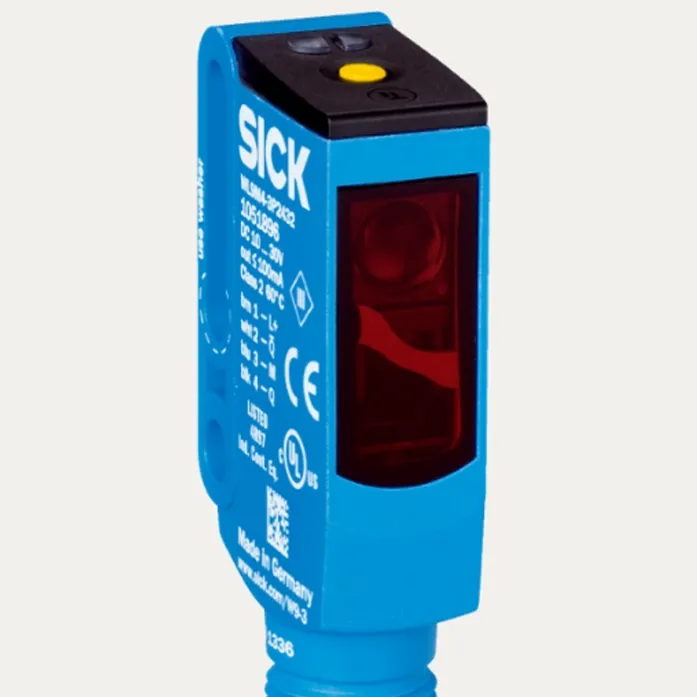
SICK WL9M4G-3P2432 Photoelectric sensor
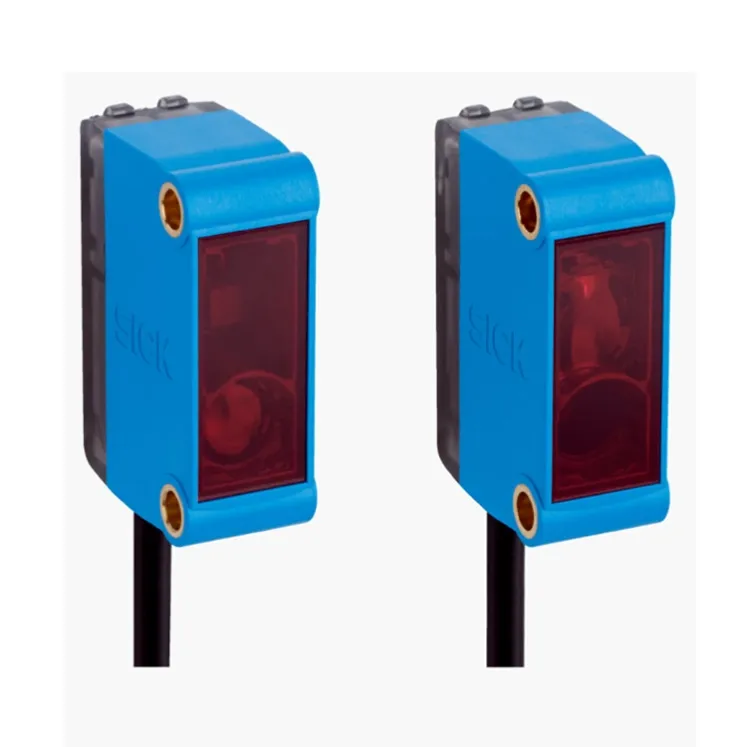
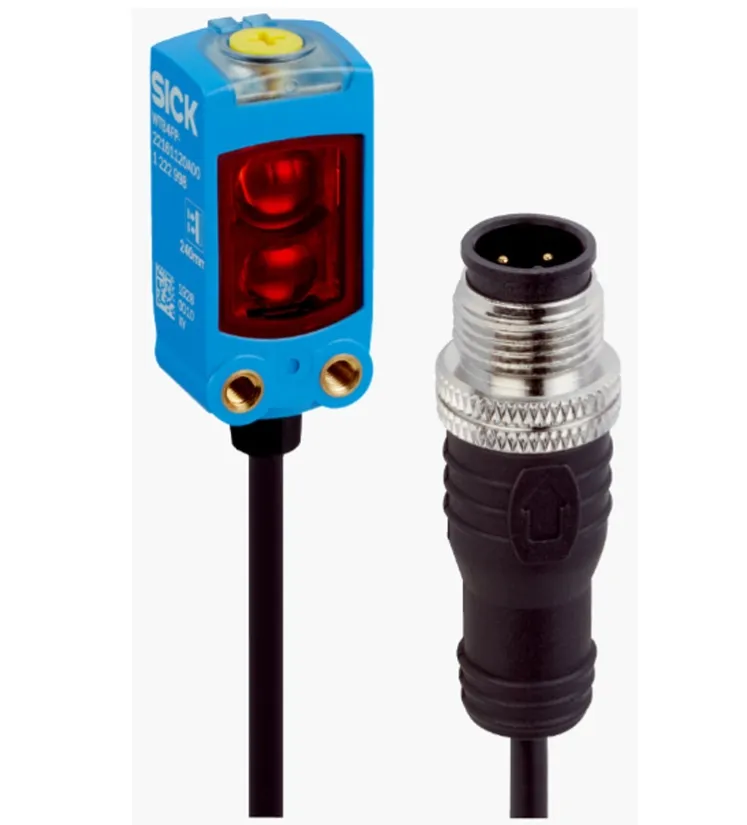
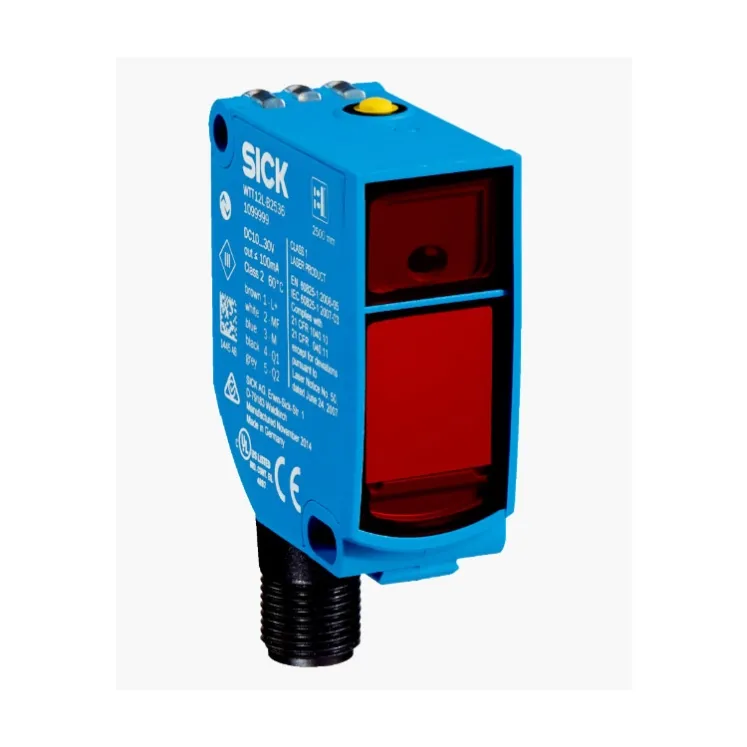
SICK WL9M4G-3P2432 retro-reflective photoelectric sensor with autocollimation optics, PNP, part 1051900. Long-range detection with corner-cube reflectors.
Overview
The SICK WL9M4G-3P2432 (part number 1051900) is a retro-reflective photoelectric sensor with autocollimation optics and PNP output. The sensor sends its beam to a reflector mounted opposite and detects any object that interrupts the returned light, providing longer reach and better dirt tolerance than diffuse sensors.
How It Works
Emitter and receiver sit in one housing. The beam travels to a corner-cube reflector and returns along nearly the same path thanks to the autocollimation optics. When an object blocks the returned beam, the received light drops and the output switches. Because the light makes a double journey, the system tolerates partial dirt on the optics far better than diffuse detection.
Key Features
- Retro-reflective principle with autocollimation optics for reliable alignment
- Longer sensing distances than diffuse sensors of the same size
- PNP switching output
- Works with standard corner-cube reflectors such as the P250
- Good tolerance to dust and dirt on optical surfaces
- Detects objects regardless of their color and surface finish
Typical Applications
- Pallet and tote detection on long conveyor stretches
- Packaging machinery where reflectors can be mounted opposite
- Door and flap position monitoring on material handling equipment
- Detection of products passing through machine guards
- Object passage monitoring on intralogistics transfer lines
Specifications
Attribute | Value |
|---|---|
Model | SICK WL9M4G-3P2432 |
Part number | 1051900 |
Detection principle | Retro-reflective photoelectric (autocollimation) |
Required accessory | Reflector, e.g. P250 series |
Output type | PNP switching output |
Installation and Setup Notes
Align the reflector so the returned beam is centered; most reflector housings allow fine adjustment after loosening the mounting screws. Note that shiny objects can mirror-flash a plain retro-reflective sensor; for such targets choose a polarizing filter version or a through-beam arrangement. Check the reflector surface regularly in dusty areas, as a contaminated reflector reduces the operating margin.
Frequently Asked Questions
Which reflector does the WL9M4G-3P2432 need?
It operates with standard corner-cube reflectors; the P250 reflector is a commonly used match for this sensor family.
Can it detect transparent objects?
Plain retro-reflective sensors struggle with fully transparent targets because little light is blocked. For transparent objects, a version with polarizing filter or a fork sensor is the better choice.
How does it compare to a diffuse sensor?
It reaches longer distances and tolerates dirt better, but it needs a reflector mounted opposite the sensor.
Related Photoelectric Sensors
The SICK WL4SL-3P3232 offers a compact retro-reflective alternative, and the SICK WL9G-3P2432 provides a long-range diffuse option for the same W9 housing family.